
Experian FaceTime Scam Call: My Real Experience (And Why It Almost Worked)
Kathryn Jones — Founder, The Identity Vault Kathryn built The Identity Vault to stop scams before they happen. Updated April 2026. Last Updated: April 2026 · 8 min read Key Takeaways If a caller claims to be Experian and says they detected a specific charge on your credit card the moment it happened, the premise [...]


Key Takeaways
- If a caller claims to be Experian and says they detected a specific charge on your credit card the moment it happened, the premise of the call is wrong. Experian does not monitor individual transactions.
- The official Experian fraud line is (888) 397-3742. Any other number that called you about fraud should be treated as a scam until proven otherwise.
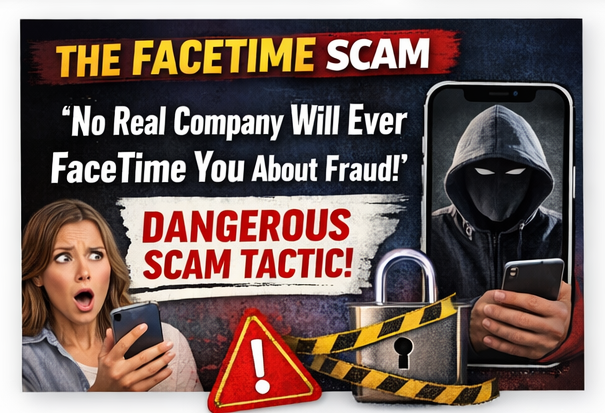
- Real fraud departments never ask to FaceTime you, install software on your phone, request verification codes, or pressure you to act in the next five minutes.
- If you are not sure whether a call is real, hang up. Then call the company yourself using the number on the back of your card or on the company’s official website.
- The 60-second test below works for any caller claiming to be Experian, TransUnion, Equifax, or any other financial institution.
In This Article
- The First Thing to Check
- Why a Real Experian Call Cannot Know What the Caller Claims to Know
- The 60-Second Test for Any Experian Fraud Call
- What to Say If You Want to Hang Up Politely
- How to Call Experian Back the Right Way
- What a Real Experian Communication Actually Looks Like
- If You Have Already Engaged With the Call
will FaceTime you
real fraud line
spot the scam
Your phone rings. Caller ID shows an unfamiliar number. The voice on the other end says they are calling from Experian’s fraud monitoring department about a suspicious charge on your credit card. This is the start of an Experian fraud call you need to be ready for, whether the call turns out to be legitimate or a scam. The caller sounds calm and professional. They use words like account, fraud, and security. They want you to verify some information.
If this is happening right now, take a breath. You have time. The caller is going to push you to act fast, but you do not have to. Most of what follows can be settled in under a minute, without needing to call Experian at all.
This guide walks you through a 60-second test you can run right now to figure out whether the call is real. It also covers what to do next, whether the call turns out to be a scam or whether you genuinely want to verify it with Experian directly.
The First Thing to Check
Before anything else, listen to what the caller is claiming the bureau detected.
If they said something like “we noticed a $1,100 charge on your Visa for a plane ticket to Europe,” the call is a scam. Any version where they describe a specific transaction on a specific card has the same tell. You can stop right there. The premise is impossible.
Credit bureaus do not see your individual purchases. They never have. That information lives with your credit card issuer (Visa, Mastercard, Discover, American Express) and the merchant where the charge was made. The bureau receives a monthly summary from your lender showing whether you paid your bill on time, your current balance, and your credit limit. They do not see the line items.
This is the single most useful fact for spotting an Experian fraud call. The scammer’s whole script depends on you not knowing what the bureau actually does. Once you know, the call falls apart in the first sentence.
Why a Real Experian Call Cannot Know What the Caller Claims to Know
To understand why this matters, it helps to know what each party in the credit system actually sees as transactions happen.
What your credit card issuer sees
When you swipe your card or type the number into a website, your bank or card issuer sees the transaction immediately. They know the merchant, the dollar amount, the time, and often the location. If something looks unusual based on your spending patterns, their fraud monitoring system might flag it within seconds. They are the ones who can call you about a specific charge, because they actually have the data.
What the merchant sees
The store or website where you used the card sees the transaction the same way. They know what you bought, when, and how you paid. If you dispute the charge, they have the receipt.
What the credit bureau sees
The credit bureau sees almost none of this. Once a month, your lender sends the bureau a summary report. It says things like “the customer’s balance is $1,200, the credit limit is $5,000, and the account is current.” That is the level of detail the bureau works with. They do not see that you bought a plane ticket. The bureau does not know whether the charge was for $1,100 or $11. And no part of the system updates as transactions happen, because the data refreshes monthly and contains no transaction-level information.
So when a caller claims to be from Experian and tells you about a specific recent charge, they are claiming knowledge the bureau does not have. The call is fake from the opening sentence.
⚠ The shortcut
Any call from any “credit bureau” about a specific recent charge is a scam. Hang up. You do not need to verify anything. The premise of the call is impossible.
The 60-Second Test for Any Experian Fraud Call
If the call is not about a specific recent charge, it might still be a scam. Run through this five-question checklist while you are on the phone. Each “yes” is a strong signal.
The 5 Tells in 60 Seconds
Did they ask to FaceTime you?
No legitimate fraud department uses video calls. If FaceTime, screen sharing, or any video chat comes up, the call is a scam. Hang up.
Did they ask you to install an app?
TeamViewer, AnyDesk, RemotePC, or any “security app” you have not heard of is a remote access tool. Once installed, the caller can see and control your phone. No real bank or bureau will ever ask you to install one.
Did they ask you to read a verification code?
Verification codes exist to protect you from people who are not you. Reading one to a caller is the same as handing over your password. Real companies never ask for codes over the phone.
Did they mention gift cards in any context?
No real company, government agency, or fraud team accepts gift cards as payment, security, or anything else. The moment gift cards come up, you are talking to a scammer.
Are they pressuring you to act in the next few minutes?
Phrases like “we don’t have time for that” or “if you hang up I cannot guarantee your account will be safe” are signals to hang up faster. Real fraud teams are happy to let you call them back.
If you got even one yes, the call is a scam. You do not need to verify anything further. The request itself was the proof.
What to Say If You Want to Hang Up Politely
You do not owe a scammer an explanation. You do not owe them politeness either. You can hang up mid-sentence and not say anything at all. That is a perfectly acceptable response.
If hanging up cold feels uncomfortable, here are three lines that work:
“I am going to call you back at the official number. Goodbye.” Then hang up. If they protest that there is not time, that is itself a confirmation it is a scam. Hang up faster.
“I do not discuss financial matters on unsolicited calls. Please send written correspondence to the address on file.” Then hang up. Real companies are happy to send you something in writing. Scammers do not have your real address on file because they are not actually who they say they are.
“No, thank you.” Then hang up. This is enough. You are not being rude. You are protecting yourself.
Some people find it physically hard to hang up on another person. If that is you, practice saying one of those three lines out loud right now, before you ever get the call. Having a script you have already rehearsed makes it much easier to follow through in the moment.
How to Call Experian Back the Right Way
If after hanging up you want to verify whether anything is actually wrong with your credit, here is how to do it properly.
Use the official phone number
The Experian fraud department phone number is (888) 397-3742. This number is published on Experian’s official website and on every fraud alert page they operate. Do not use any number a caller gave you. Do not use a number from a Google search result that might be a scammer’s lookalike domain. You have three real options for the right number. The number above is the official Experian fraud line. The back of your credit card routes you through your card issuer’s fraud team. And your most recent statement has the official number printed on it.
Or log in directly to your account
If you have an Experian account, you can also log in directly at experian.com by typing the URL yourself. Do not click any links from texts, emails, or anything the caller sent. Once you are logged in, look for any fraud alerts in your account dashboard. If there is no alert on file, the call you got was not from Experian.
Check the other bureaus while you are at it
If a scammer targeted you with a fake Experian call, they may also have your information from another data source. Check your fraud alert status at all three major bureaus:
Experian: experian.com/help or (888) 397-3742
TransUnion: transunion.com/fraud-victim-resource or (800) 680-7289
Equifax: equifax.com/personal/credit-report-services/credit-fraud-alerts/ or (800) 685-1111
You only need to call one. By federal law, that bureau will notify the other two within 24 hours.
What a Real Experian Communication Actually Looks Like
For comparison, here is how Experian actually contacts you when something needs your attention.
You signed up for monitoring, you get a text or email alert
If you have an Experian membership or have enrolled in their free credit monitoring, they may send you alerts when something changes on your credit report. New credit inquiries, new accounts opened in your name, or significant changes to your score will trigger an email or push notification through their app. These alerts always direct you to log in to verify, never to call a number or click a link to confirm.
Identity theft confirmed, you get a letter
If your information was involved in a confirmed data breach that Experian is notifying you about, that notification arrives by mail. The letter includes a free credit monitoring offer with a unique enrollment code. It does not include a phone number to call back, because Experian is not calling you.
You called them, they answer
The only time Experian initiates a phone conversation with you is if you called them first and they are returning your call about an open case. In that situation, they will reference your case number and the specific issue you contacted them about.
None of these legitimate channels involves an unsolicited phone call where they describe a specific charge and ask to FaceTime you. If that happened, it was a scam.
If You Have Already Engaged With the Call
If a similar call has already happened to you and you accepted the FaceTime, installed something, gave verification information, or transferred money, you need to act today. Not tomorrow. Today.
The first 24 hours after a scam are the most important window for limiting the damage. We built a free, step-by-step recovery plan for exactly this scenario. It walks you through what to do in the first hour, the rest of day one, and the wind-down phase. No signup, no upsells.
Quick first steps
Place a fraud alert at one of the three big credit bureaus using the official numbers above. You only need to call one.
Call your credit card companies and your bank using the number on the back of your card. Tell them what happened and ask them to flag your accounts for fraud monitoring.
If you installed any app the caller mentioned, delete it immediately. Then turn your phone off, turn it back on in airplane mode, and use a different device to change your passwords. The phone might still be compromised even after you delete the app.
Within 24 hours, place a credit freeze at all five major bureaus. The big three handle credit cards and loans. Innovis handles a fourth credit reporting layer. ChexSystems controls whether new bank accounts can be opened in your name. A fraud alert and a freeze can both be active at the same time. They work together.
The Bottom Line
An Experian fraud call that describes a specific recent charge is not a real Experian call. The bureau cannot see your transactions. Anything the caller claims to know is either a guess, a script, or information they pulled from a data breach to make the call sound credible.
You do not need to verify the call. You do not need to call Experian back to confirm. The premise of the call is impossible, which means the request itself is the proof. You can hang up, and you can keep going about your day.
If you want to be thorough, place a free fraud alert at one of the bureaus afterward. It takes five minutes online and protects you for a full year. Then go check the back of your credit cards for the real fraud line, save those numbers in your phone, and you will be ready the next time someone calls.
Lock Down Your Identity in One Hour
Knowing how to spot a scam call is half the battle. The other half is locking down the credit and accounts that scammers want access to. Our free 30-step checklist walks you through every freeze, every alert, every account, in about an hour.